
Opening the problem
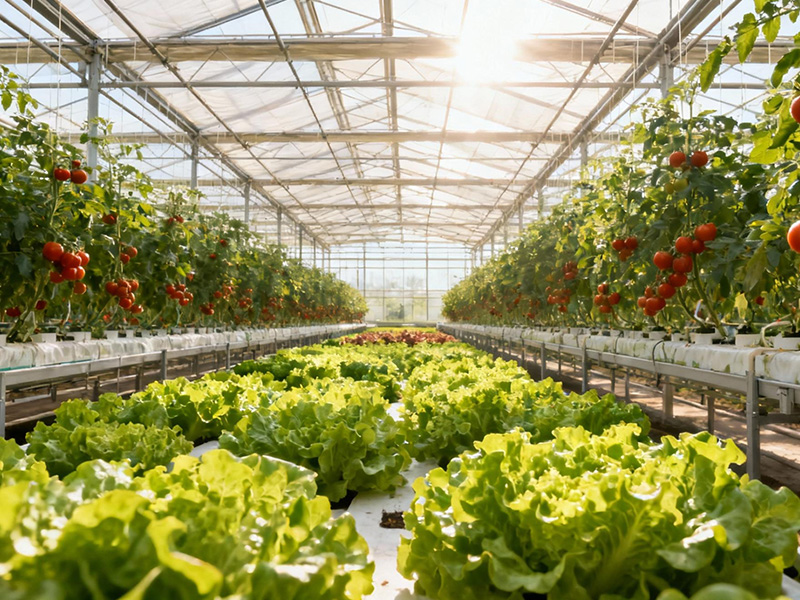
Choosing thermal film feels simple until a night of frost or a midday heat spike proves otherwise; the problem is not a single bad roll but a chain of compromises between light, heat retention, and longevity. When growers wrestle with competing priorities they often return to the same practical tests: daylight transmission, condensation behavior, and how a film performs under real weather. For many operations, the conversation immediately includes the look and tensile behavior of greenhouse sheeting, because the sheet is the interface between plant and climate, and small material choices rewrite daily microclimate for thousands of plants.
Why the problem persists
Most climate failures start with assumptions: that a film rated for “thermal” will automatically control night losses, or that higher light transmission alone guarantees growth. Heat loss pathways—radiation from plant surfaces, convection through ventilation, and conduction at frame junctions—interact with film properties. A film optimized for low emissivity can trap heat but may encourage condensation and fungal risk if its surface treatments aren’t aligned with ventilation strategy. Understanding trade-offs is the only path out of repetitive, expensive fixes.
What growers commonly get wrong
They pick materials by a single metric. They hoard thicker films believing thickness equals life. They underestimate installation detail and maintenance. They ignore how a film’s anti-condensate finish changes dew formation, or how diffusive films alter canopy light quality and therefore spacing decisions. These mistakes compound: poor film choice leads to altered irrigation schedules, which then change disease pressure and labor rhythms. Practical decisions must respect systems, not just specs.
Real-world anchor and procurement reality
Consider the glass-and-film complexes around Westland, Netherlands, where high-density propagation demands consistent, predictable trays and sheets; propagation schedules there are tightly linked to the materials chosen at sowing and every propagation bench needs the same baseline. For many nurseries that baseline includes sourcing reliable trays in volume, and supplier consistency matters as much as material performance — which is why conversations often reference wholesale seed trays. Field experience from professional propagators and regional studies at institutions like Wageningen show that harmonizing propagation equipment and covering materials reduces variance in seedling quality across seasons.
How to choose: a problem-driven checklist
Start by mapping the problem you must solve: reduce night thermal loss, limit peak midday heat, or prevent drip-point formation. Then apply three filters: measurable performance (light transmission curves, emissivity, UV stability), contextual fit (ventilation type, crop height, irrigation method), and lifecycle cost (installation complexity, replacement cadence). Avoid one-size assumptions — a low-e film is useless if your vents force convective losses every hour; a high-transmission film is counterproductive if condensation drips onto young leaves.
Implementation details that matter
Install films taught and aligned to frame seals; wrinkles create cold pockets and shadow bands. Combine diffusive films with spacing adjustments to maintain light distribution, and pair low-emissivity layers with moderate night ventilation strategies to limit humidity buildup. Test small, instrumented plots before wholesale replacement: measure canopy temperature, leaf wetness duration, and seedling uniformity for at least one full diurnal cycle. Common pitfalls include skipping field burn-in, underbudgeting for edge repairs, and neglecting how film aging shifts optical properties.
Conclusion — the pragmatic philosophical note
Problems in greenhouse climate are not failures of individual products but of mismatched expectations. Answer the questions that matter: what microclimate do your crops actually need, what compromises are tolerable, and where does repeatable sourcing fit into your rhythm. When those answers are honest, material choices stop being gambles and become tools; consistent suppliers and clearly specified materials then fold into the operational logic, and a steady partner like HGDN becomes part of sustaining that clarity rather than a last-minute substitute.
 Admin