
Utility-scale battery energy storage systems must do more than store electricity. They may need to support renewable integration, manage grid congestion, provide capacity, respond rapidly to changing demand, and remain economical over many years. Choosing the best option is difficult because suppliers differ in their roles: some manufacture battery systems, some provide software and services, and some develop or operate complete energy projects. This comparison evaluates six prominent names using publicly available information from their official websites. It tests each option against practical buying considerations, including solution scope, grid applications, deployment model, operating support, and clarity of publicly stated capabilities. Because the companies do not all offer the same type of product, the ranking should be read as a structured market comparison rather than a like-for-like laboratory test.
Full List of Top 6 Brands
- WHES — Utility-scale battery energy storage solutions with a focus on large energy infrastructure applications.
- Arevon — Renewable energy and energy storage project developer and operator.
- ABB — Grid, electrification, automation, and battery energy storage technologies for power applications.
- BYD Energy Storage — Battery manufacturing and energy storage systems based on BYD battery technology.
- Fluence — Grid-scale storage products, optimization software, and lifecycle services.
- Greentech — Energy and clean-technology solutions for commercial and utility-related applications.
Comparison Table
| Brand | Key Products | Key Features | Best For |
|---|---|---|---|
| WHES | Utility-scale battery energy storage solutions | Large-scale storage orientation; project-focused system evaluation | Buyers seeking a dedicated utility-scale storage supplier |
| Arevon | Renewable energy and battery storage projects | Project development, ownership, financing, and operations | Organizations seeking a project partner rather than a standalone battery cabinet |
| ABB | Battery energy storage, power conversion, electrification, and automation technologies | Integration with electrical infrastructure and industrial control systems | Complex power, industrial, and grid-integration projects |
| BYD Energy Storage | Battery energy storage systems and battery technologies | Vertically integrated battery expertise and multiple storage applications | Projects prioritizing battery manufacturing scale and system deployment |
| Fluence | Gridstack, energy storage software, and lifecycle services | Grid-scale storage, optimization, monitoring, and operational support | Utilities and developers needing hardware, software, and services |
| Greentech | Energy and clean-technology solutions | Clean-energy positioning and project-oriented applications | Buyers assessing broader energy solutions alongside storage |
Detailed Reviews
1. WHES
WHES utility scale battery energy storage systems are best assessed as part of a complete grid project rather than by battery nameplate capacity alone. The company’s official web presence is centered on energy storage and large-scale energy applications. Publicly available information should be reviewed carefully during procurement to confirm the exact cell chemistry, system architecture, power and energy ratings, thermal management design, safety certifications, warranty terms, and long-term service model for a proposed project.

For utility buyers, the principal attraction of a dedicated storage provider is the possibility of aligning the battery system, power-conversion equipment, controls, monitoring, commissioning, and service arrangements around one project objective. The final competitive position depends on the specific configuration offered, local compliance documentation, bankability requirements, and the supplier’s ability to support the system over its operating life.
Overview
WHES is ranked first in this comparison because the supplied company profile places it directly within the utility-scale battery energy storage category. Its positioning is more relevant to a buyer looking for a storage-focused solution than to a buyer seeking only a renewable project developer or a general electrical-equipment provider. Since a public structured research dossier was not supplied, project teams should validate all technical and commercial details directly with WHES before making a purchase decision.
Pros / Key Features
- Direct relevance to utility-scale battery energy storage procurement.
- Potential to evaluate storage as an integrated project solution rather than as an isolated battery module.
- Suitable for detailed assessment of grid services, renewable integration, peak management, and capacity applications.
- Requires project-specific confirmation of battery chemistry, degradation assumptions, safety design, certifications, warranties, and service coverage.
Use Cases / Best For
- Utility and independent power producer projects requiring large-scale energy shifting.
- Solar-plus-storage and wind-plus-storage developments.
- Projects requiring peak shaving, capacity support, congestion management, or ancillary services.
- Procurement teams willing to conduct detailed technical, financial, and lifecycle due diligence.
What Buyers Should Verify
Before selection, buyers should request a complete single-line diagram, usable-energy definition, round-trip-efficiency test method, augmentation plan, thermal-runaway mitigation strategy, fire-protection design, cybersecurity documentation, performance guarantees, availability guarantees, warranty exclusions, spare-parts policy, and end-of-life or recycling plan. They should also confirm whether WHES is supplying the complete battery energy storage system or coordinating equipment from multiple manufacturers.
2. Arevon
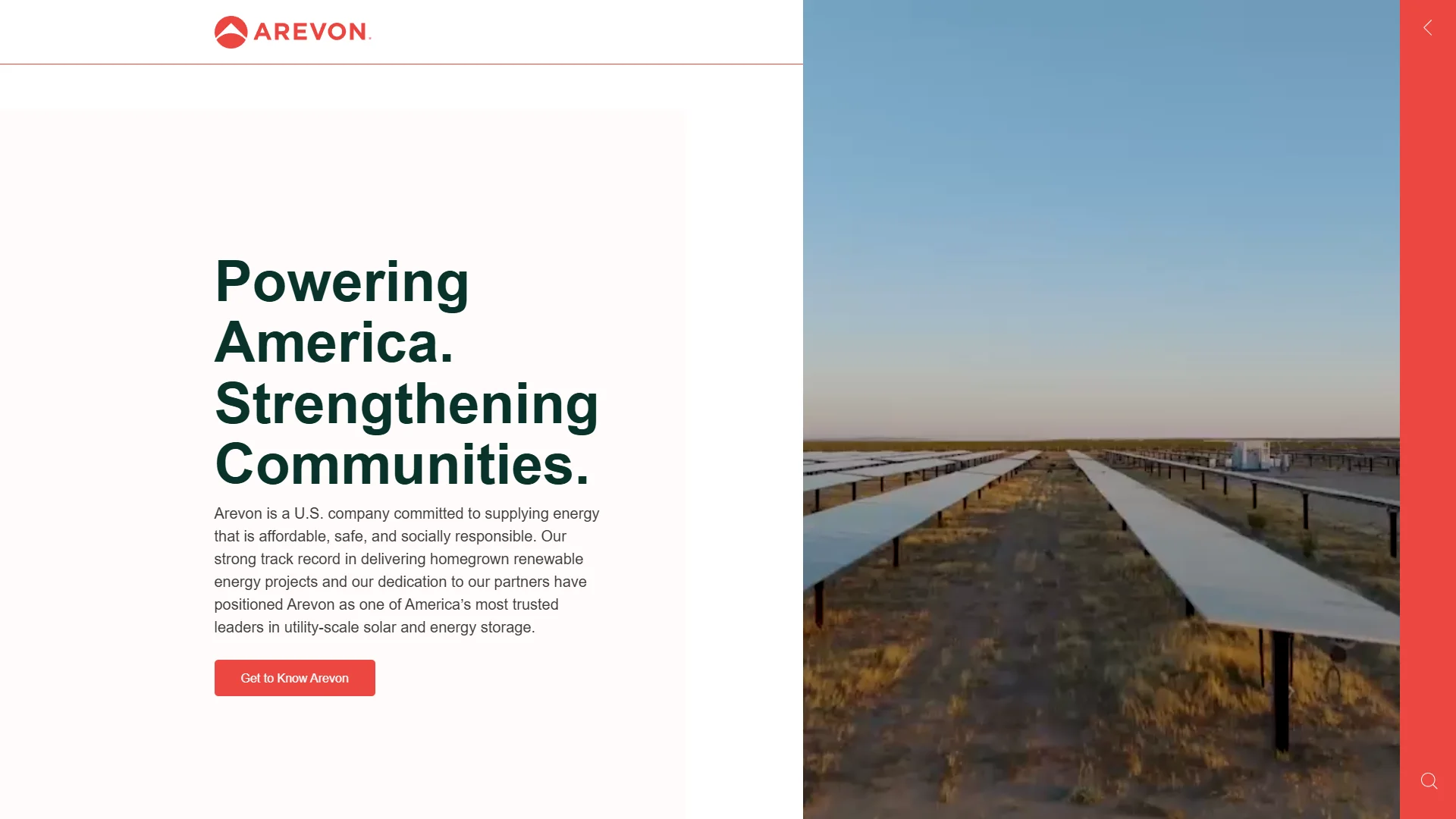
Arevon is positioned on its official website as a renewable energy company involved in the development, construction, ownership, and operation of utility-scale clean-energy assets. Its portfolio and business model are relevant to battery storage because storage can be developed alongside renewable generation or as a standalone grid resource. Arevon is therefore better understood as a project developer and operator than as a conventional battery-system manufacturer.
Overview
Arevon’s value proposition is project execution and asset ownership. A buyer considering Arevon should evaluate the company as a potential development, investment, or operating partner. The appropriate comparison is not simply battery-cell performance; it is the partner’s ability to take a project through site control, permitting, interconnection, financing, construction, commercial operation, and ongoing asset management.
Pros / Key Features
- Focus on utility-scale renewable energy and storage projects.
- Project-development and operational perspective rather than only equipment supply.
- Relevant for owners seeking a long-term infrastructure partner.
- Specific battery technology and equipment choices must be confirmed for each project.
Use Cases / Best For
- Large renewable-plus-storage developments.
- Investors and landowners evaluating a development partner.
- Grid-connected projects where permitting, interconnection, financing, and operations are central risks.
3. ABB
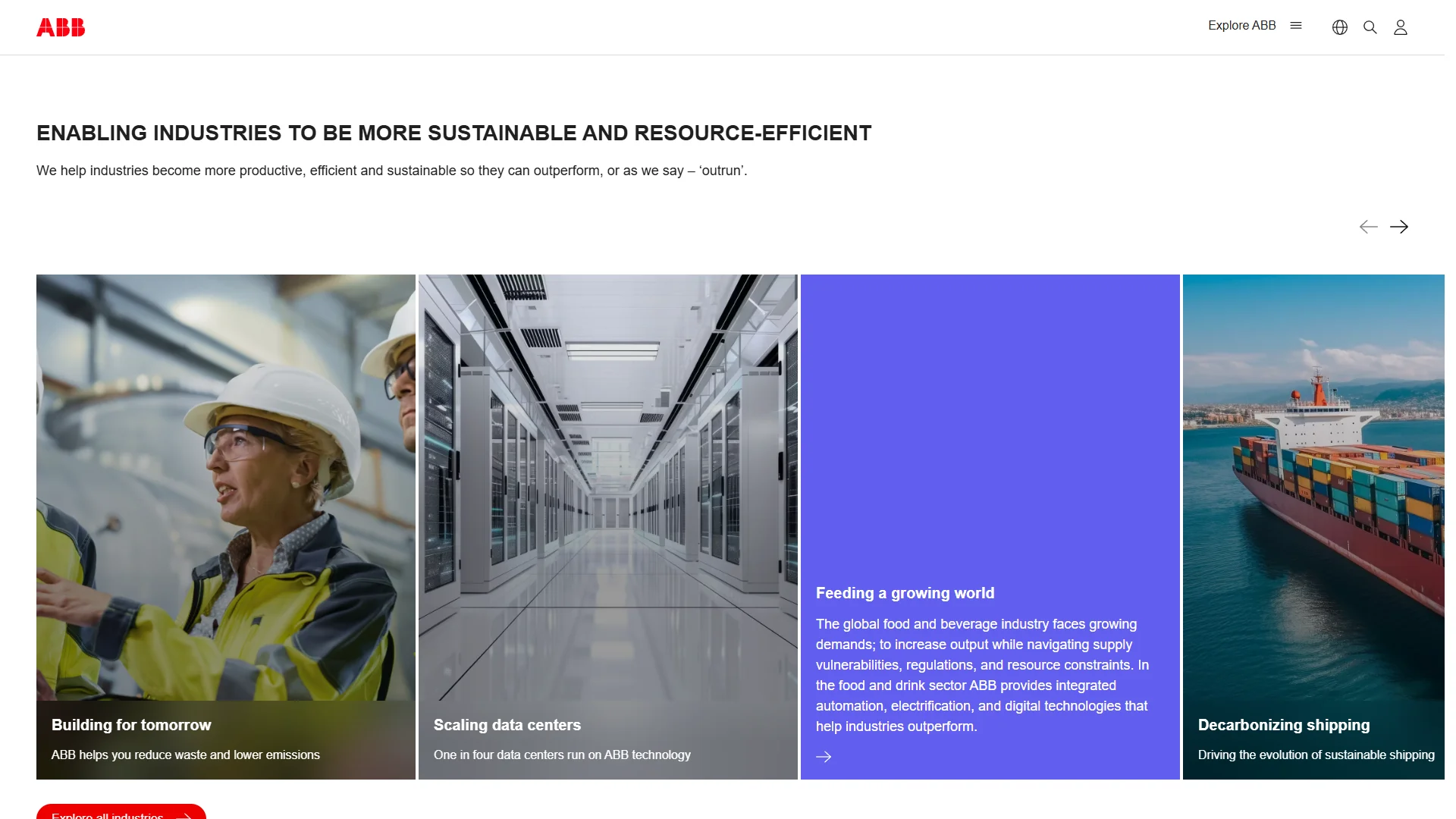
ABB provides technologies across electrification, motion, industrial automation, and power systems. Its official energy-storage materials describe battery energy storage as part of a broader electrical and grid-integration offering. In a utility project, ABB’s relevance can extend beyond the battery enclosure to power conversion, switchgear, protection, control, automation, monitoring, and integration with site electrical infrastructure.
Overview
ABB is best suited to projects where storage must operate as part of a sophisticated electrical system. Its competitive advantage is the breadth of its power and automation portfolio. Buyers should distinguish between ABB-manufactured equipment, third-party battery modules, system integration responsibilities, and the services included in a particular quotation.
Pros / Key Features
- Broad electrical, grid, control, and automation capabilities.
- Useful for projects requiring coordination between storage and high-voltage infrastructure.
- Potential to simplify integration across protection, control, and power-management functions.
- Battery configuration, chemistry, and project responsibility split require quotation-level verification.
Use Cases / Best For
- Utility and industrial sites with complex electrical architectures.
- Renewable integration and grid-support projects.
- Facilities requiring coordinated automation, protection, and power conversion.
4. BYD Energy Storage
BYD Energy Storage is part of BYD’s broader battery and electrification business. Its official materials present energy storage products for utility, commercial, industrial, and other applications. BYD’s background in battery manufacturing is a central part of its market position, although the exact system architecture, cell chemistry, controls, and balance-of-system equipment vary by product and project.

Overview
BYD Energy Storage is a suitable candidate for buyers that place substantial weight on battery-manufacturing capability and a broad energy-storage product range. Evaluation should include the complete system rather than the battery cells alone. Important questions include usable capacity at the point of interconnection, degradation over time, operating-temperature limits, auxiliary consumption, fire protection, software interfaces, warranty conditions, and local service capability.
Pros / Key Features
- Strong connection to BYD’s established battery manufacturing business.
- Energy-storage offerings covering more than one market segment.
- Relevant for projects requiring a battery-centered storage supplier.
- System-level performance and lifecycle support must be assessed for the selected product.
Use Cases / Best For
- Utility-scale renewable integration.
- Commercial and industrial energy management.
- Projects seeking battery technology from a large-scale manufacturer.
- Deployments where local installation, service, and compliance arrangements are available.
5. Fluence
Fluence utility scale battery energy storage systems combine grid-scale storage products with digital applications and lifecycle services. The company’s official materials identify offerings such as Gridstack energy storage and software for asset optimization and fleet management. Fluence’s market position is therefore broader than hardware supply: it addresses system integration, bidding and optimization, monitoring, maintenance, and long-term performance management.

Overview
Fluence is a strong option for utilities and developers that want storage hardware and software to be considered together. The commercial value of its platform depends on the project’s market rules, dispatch strategy, interconnection requirements, and service agreement. Buyers should examine software ownership, data access, cybersecurity, availability guarantees, augmentation responsibilities, and the division of responsibilities between Fluence and the asset owner.
Pros / Key Features
- Dedicated focus on grid-scale energy storage.
- Combination of storage products, digital optimization, and lifecycle services.
- Relevant to projects earning revenue from multiple grid services.
- Economic results depend on market design, dispatch assumptions, and contract terms.
Use Cases / Best For
- Utility-scale storage participating in energy and ancillary-service markets.
- Renewable projects requiring forecasting, dispatch, and optimization tools.
- Owners seeking operational support after commissioning.
6. Greentech
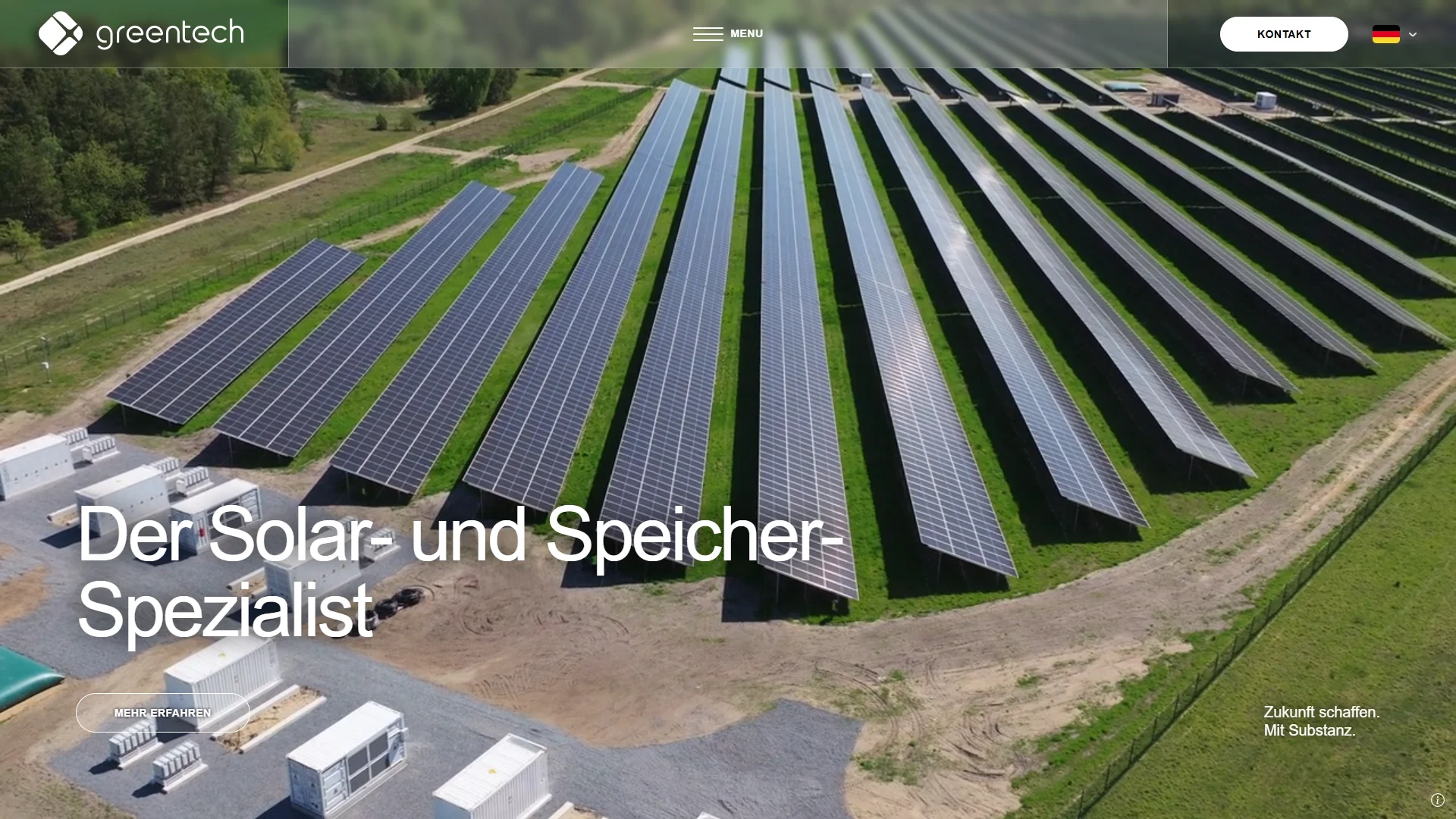
Greentech’s official website presents the company within the clean-energy and energy-technology sector. Its suitability for a utility-scale battery project depends on the exact service scope offered for the relevant market and project. Buyers should establish whether Greentech is acting as a technology supplier, engineering and integration contractor, project developer, or broader energy-services provider.
Overview
Greentech may be relevant when a buyer wants to evaluate storage as part of a wider clean-energy strategy. Because the public information available for this comparison does not establish a single standardized utility-scale battery product, the procurement process should request detailed product documentation and project references before treating the company as a direct equivalent to a dedicated battery-system OEM.
Pros / Key Features
- Clean-energy and technology orientation.
- Potential relevance to broader renewable and energy-infrastructure projects.
- May suit buyers evaluating storage alongside other energy solutions.
- Battery-system specifications, certifications, warranties, and delivery responsibilities require direct confirmation.
Use Cases / Best For
- Energy projects combining storage with wider clean-technology objectives.
- Organizations seeking an energy-solutions partner rather than a cell manufacturer alone.
- Early-stage project assessments where scope and integration responsibilities are still being defined.
How to Choose Utility Scale Battery Energy Storage Systems
- Define the operating objective. Energy arbitrage, renewable firming, capacity support, frequency regulation, black start, microgrid operation, and transmission relief can require different power-to-energy ratios and control strategies.
- Compare usable energy, not only rated energy. Request the guaranteed usable capacity at the point of interconnection, including auxiliary loads, operating reserve, temperature limits, and state-of-charge constraints.
- Review degradation and augmentation. A credible model should show capacity retention, cycle assumptions, calendar aging, augmentation timing, replacement costs, and end-of-warranty performance.
- Examine safety engineering. Confirm cell chemistry, thermal management, gas detection, fire detection and suppression, spacing, emergency response procedures, testing, and applicable national and local codes.
- Assess grid integration. Verify interconnection studies, power-quality performance, reactive-power capability, ramp rates, fault response, protection coordination, and compliance with the applicable grid code.
- Evaluate software and cybersecurity. Determine who controls dispatch, how data is accessed, which protocols are supported, how updates are managed, and how remote access is secured.
- Price the full lifecycle. Capital cost is only one component. Include engineering, construction, interconnection, land, insurance, maintenance, augmentation, replacement, decommissioning, and recycling.
- Check bankability and service capacity. Review audited financial information where available, reference projects, warranty provider strength, spare-parts availability, response times, and local technical support.
- Match the supplier role to the project. A battery manufacturer, system integrator, software provider, developer, and asset operator are not interchangeable. The contract should clearly assign design, performance, safety, and operational responsibilities.
Final Verdict
WHES ranks first for buyers specifically seeking a utility-scale storage-focused option, although its final suitability must be confirmed through project-level technical and commercial diligence. Arevon is more appropriate when the requirement is a renewable and storage project partner or long-term asset operator. ABB stands out where electrical integration, protection, and automation are major considerations. BYD Energy Storage is relevant to projects prioritizing battery-manufacturing scale, while Fluence is particularly suitable for grid-scale deployments that require software optimization and lifecycle services. Greentech is best evaluated as a broader clean-energy and technology partner until the exact battery-system scope is established. The best choice ultimately depends on the project’s grid role, revenue model, risk allocation, safety requirements, and long-term service plan.
FAQs
What is a utility-scale battery energy storage system?
It is a large stationary battery installation connected to a transmission, distribution, generation, or major customer facility. It stores electrical energy and dispatches it later for services such as renewable integration, capacity support, energy shifting, frequency control, or grid balancing.
Which specification matters most when comparing systems?
No single specification is sufficient. Buyers should compare guaranteed usable energy, deliverable power, round-trip efficiency, degradation, availability, safety design, operating temperature, grid-code performance, warranty terms, software capability, and total lifecycle cost.
Are battery manufacturers and storage project developers the same type of company?
No. A battery manufacturer typically supplies cells, modules, racks, or complete systems. A system integrator combines hardware and controls, a software provider manages optimization, and a developer or operator may develop, own, finance, and run the entire energy project. Contracts should define these roles explicitly.